
Fruits / Pomes
Pear Nutrition Facts
PhilFCT
Macronutrients
Nutrition Facts
Consume
Limit
Avoid
| Serving Size: 100g | |
| Edible Portion: 73% | |
| Calories | 57kcal / 2530kcal (2%) |
Macronutrients
Total Fat | 0.6 g/ 42g (1%) low | ||||
| |||||
Total Carbohydrates | 12.6 g/ 348g (3%) | ||||
| |||||
Protein | 0.4 g/ 71g (0.56%) | ||||
Vitamins
Vitamin A | 0 mcg RAE/ 700mcg RAE (0%) |
Vitamin C | 4 mg/ 70mg (5%) |
Vitamin B1 | 0.02 mg/ 1mg (1%) |
Vitamin B2 | 0.01 mg/ 1mg (0.77%) |
Vitamin B3 | 0.2 mg NE/ 16mg NE (1%) |
Minerals
Calcium | 36 mg/ 750mg (4%) |
Iron | 0.3 mg/ 12mg (2%) |
Phosphorus | 8 mg/ 700mg (1%) |
Sodium | 1 mg/ 1500mg (0.07%) free |
Some descriptions on this page are generated with AI assistance to make nutrition information easier to understand. Nutritional data comes from trusted sources like DOST-FNRI and USDA.
What is this food?
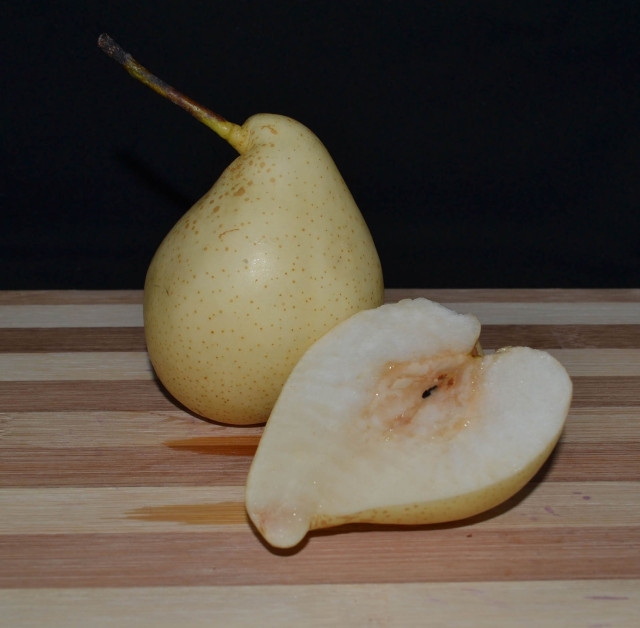
AI-assisted Pear (fresh pear) is a sweet, juicy fruit. For every 100g, it has about 57 kcal, 12.6g carbohydrates, 2.7g fiber, and 8.4g natural sugar.
Why it matters to health
AI-assisted Pears can support better digestion because of their dietary fiber (2.7g per 100g). The natural carbs and sugars give quick energy, which can fit well for snacks between meals. It’s also low in fat (0.6g) and sodium (1mg), making it a lighter choice compared with many sweet treats. If you’re watching sugar intake, it helps to remember that pears still contain natural sugar—so pairing it with protein or healthy fat can help keep you satisfied longer.
Healthier tips
AI-assisted For your 1–2 daily snacks, try 1 small to 1 medium pear (or about 1 cup sliced) instead of sugary desserts. To make it more filling, pair pear with plain yogurt, milk, or a small handful of nuts. If you’re eating it with meals, keep the fruit portion to about 1 serving so your plate stays balanced with rice/bread, ulam, and gulay.
Common Filipino dishes
Pearl fruit salad, fruit cups with nata de coco, ginataan with fruit (pear), mixed fruit smoothies, pear as a topping for yogurt
Images
Disclaimer
Juan Nutrisyon provides educational nutrition information to help users better understand the foods they eat. Nutrient values are sourced from reputable databases including the Philippine Food Composition Tables (FCT) and USDA FoodData Central. Calculation methods for estimating nutrients across multiple foods have been reviewed by a licensed dietitian. The information provided is not intended to diagnose, treat, cure, or prevent any disease. While every effort is made to ensure accuracy, Juan Nutrisyon has not yet undergone formal clinical validation studies and should not replace personalized medical advice from a qualified healthcare professional.
Juan Nutrisyon is an independent project built to make nutrition information more accessible to Filipinos. Built by Wern Ancheta. If you find it helpful, you can support its continued development.